
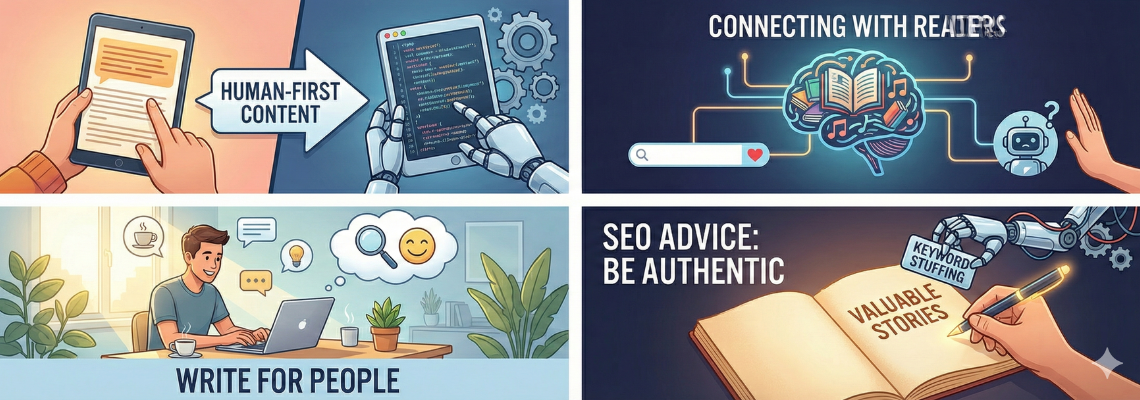
Why Google Now Rewards Human-First Content (And What It Means for Your SEO)
Google has once again clarified a key truth about how its search ranking systems work — and if you’re publishing online content, this is something you absolutely need to understand.
According to Google’s Search Liaison Danny Sullivan, all of Google’s ranking systems — including classic web search and newer AI-powered search experiences — are designed to reward content that is genuinely written for humans. That means content created with real people in mind, not just search engine algorithms or AI tools.
🧠 No “New” SEO for AI Search
Despite the growth of AI search tools and buzz-words like AEO (Answer Engine Optimization) or GEO (Generative Engine Optimization), Google insists there’s nothing fundamentally new you need to do. Content creators don’t have to chase these acronyms — they simply need to focus on the same principle that has guided Google for years: provide value to actual users. S.E.J(Search Engine Jounal)
🧩 What Google Means by “Human-First”
So what actually qualifies as human-focused content? According to Google:
✅ Content that answers real user questions
✅ Written in natural, engaging language
✅ Helpful, insightful, and easy to understand
✅ Designed to solve problems — not just hit keywords
✅ Created by people with expertise and real perspective.
Google’s systems are tuned to recognize when content satisfies human curiosity or needs. If it does, it’s more likely to rank well — even as ranking technologies evolve.
📈 Why This Matters for You
In the past, many content creators focused heavily on traditional SEO tactics (like keyword stuffing or writing mainly for bots). But Google’s evolution means:
- Content that prioritizes users ranks higher.
- Trying to game specific AI systems is less effective.
- Long-term success comes from truly serving your audience.
✏️ Real SEO Strategy Tips
Here’s how you can align your content with what Google rewards:
✔️ Write naturally for humans — not robots.
✔ Focus on solving real problems your readers care about.
✔ Show your expertise and unique point of view.
✔ Use clear headings, easy formatting, and readable language.
✔ Don’t over-optimize for AI or machine cues alone.